Retainers & the Retention Phase
Smooth, straight teeth and no more braces. What comes next decides whether that smile lasts. Teeth do not hold their new positions on their own once active treatment with braces or clear aligners ends. Dr. Najjar will pair you with the right retainer and a wear schedule at NuLine Orthodontics that protects your results.
What it is
A custom appliance worn after orthodontic treatment. Its job is to hold your teeth in their corrected positions while the bone and gum tissue stabilize around them.
Who it's for
Anyone finishing braces or clear aligner treatment. Think of retention as the step that protects the time and investment you put into straightening your smile, not as an optional extra.
How we help
We match the retainer type to your case, fit it precisely, spell out how and how long to wear it, and turn around a replacement quickly if it's ever lost or damaged.
Lasting results come down to the retention phase. Follow your wear schedule and your smile holds.
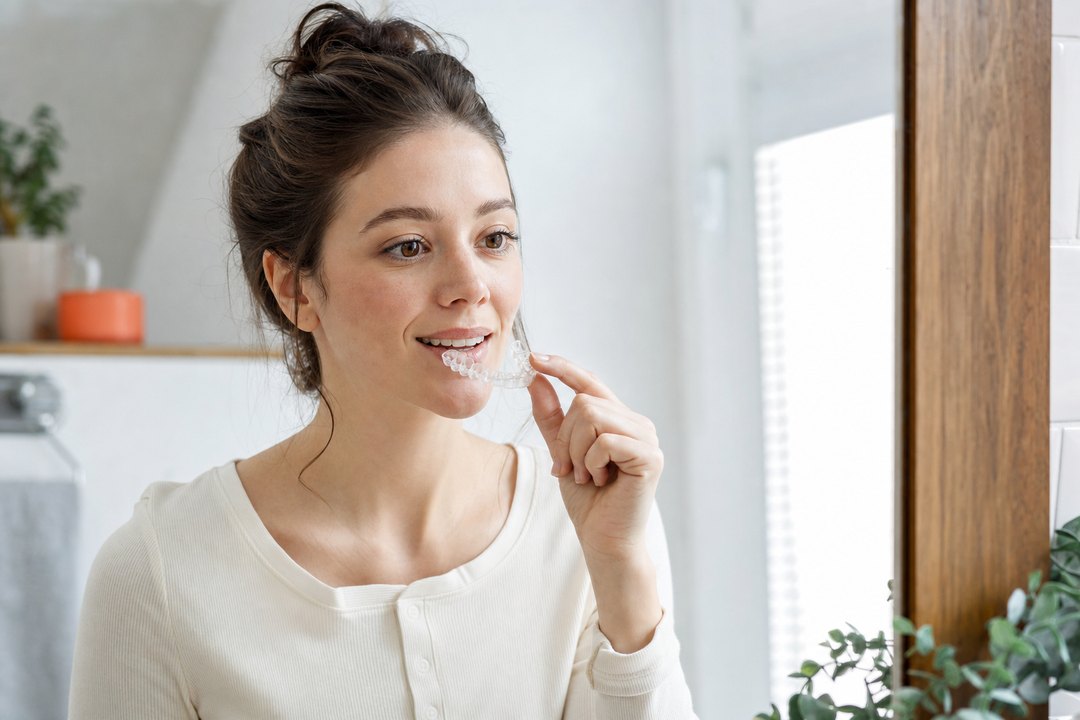
Why Retention Matters
- Teeth have memory: Moved teeth tend to drift back toward where they started
- Ligaments need time: The fibers holding your teeth, called periodontal ligaments, spend months adjusting and stabilizing around the new position
- Bone is still settling: The anchoring bone keeps remodeling after treatment ends
- Lifelong tendency: Gradual shifting can continue for years, leaving long-term retainer wear to keep your smile looking its best
- Protects your investment: The result took months or years to achieve, and consistent retainer wear preserves it
Common Types of Retainers
Fixed (Bonded) Retainer
- A thin wire bonded behind the front teeth
- In place around the clock, so there's nothing to remember to put in
- Nobody sees it when you smile, because it's completely hidden
- Often stays put for years
- Keeping the area clean means flossing carefully around the wire
Hawley Retainer
- A thin wire across the front teeth, anchored to a U-shaped acrylic base
- Simple, removable, and built to last
- Colors and designs can be added to make it yours
- Cleaning is easy, and adjustments are possible over time if needed
- Many patients prefer it as a proven, long-lasting option
Clear Retainer
- Clear plastic, custom-made to fit snugly over your teeth
- No wires show, so it stays virtually invisible
- Comes out easily for eating and cleaning
- Comfortable, and familiar territory for clear aligner patients
- Regular wear may mean replacing it down the road
Three good options and one that fits you best. We'll recommend the right one for your smile and lifestyle.
Wearing & Caring for Your Retainer
How to Wear It
- Follow the schedule Dr. Najjar gives you exactly. Often that's full-time at first, then nighttime-only long term
- Speech feeling a little different at first is normal, and you'll adjust within a few days
- Store it in its case whenever it's out, since a retainer wrapped in a napkin is easily thrown away
- Take it out to eat and before you swim
- Hot water, hot air, the washing machine, and pets are all hazards. Dogs in particular love to chew on retainers
Keeping It Clean
- A soft toothbrush, a little mild soap, and cool or lukewarm water are all you need to clean it every night
- Cleaning products can help, though gentle brushing of the appliance is still the part you can't skip
- Fixed retainers need daily flossing, carefully, around and under the wire
- Never bend or adjust it yourself
- Bring it along to checkups so we can confirm the fit
Frequently Asked Questions
The first several months after treatment usually call for full-time wear, and after that most patients move to nighttime only. That first stretch matters most, because the bone and the periodontal ligaments around each tooth are still reorganizing around their new positions and have not finished settling.
Once you move to nights only, people usually want to know when they can stop. Teeth can shift throughout life, so Dr. Najjar typically recommends keeping up some level of long-term nighttime wear to hold your results stable. Worn while you sleep, a retainer asks almost nothing of your day, and it is the difference between a result you keep and one you slowly give back.
Your own schedule comes from us, because how far your teeth moved and how your bite settles afterward both feed into it. Bring your retainer along to your checkups so we can confirm it still fits the way it should.
In that first year after treatment, teeth are most inclined to drift back toward their original positions. Skip your retainer and they can shift, occasionally far enough that treatment has to be repeated with braces or clear aligners. Consistent wear is the simplest protection your smile has.
Relapse rarely announces itself. It tends to show up first as a retainer that takes a little more effort to seat, or a lower front tooth that looks slightly turned in a photo, long before anyone would call the smile crooked again. The answer to a few missed nights is to wear it again tonight, as long as it still seats fully without being forced. If it will not seat, leave it out and call us.
Years later the same logic holds. Teeth can keep drifting gradually through adult life whether or not you ever had orthodontic treatment, so stopping altogether leaves nothing holding your result in place. Wearing it on the schedule Dr. Najjar gives you helps limit how far that drift goes.
Call us right away. Teeth can start shifting within days of going without a retainer, which makes a fast replacement the priority. Before you write a lost retainer off, though, search properly. They turn up in napkins, lunch bags, coat pockets, and car consoles far more often than people expect, and finding yours is quicker than replacing it.
If it turns up intact, rinse it, brush it, and try it. Wear it only if it seats fully without force. If it is cracked, warped, or has a sharp edge, leave it out and keep the pieces for us to see, because a retainer that has lost its shape can press on the wrong teeth or cut your gum. Do not try to glue it back together either. Household adhesives are not safe in the mouth, and a repaired seam will not hold your teeth the way the original did.
A fixed retainer that has come unbonded at one end needs a call too. The wire can catch your tongue, and the teeth it was holding are no longer being held. Cover the loose end with orthodontic wax if you have some, leave it alone otherwise, and let us rebond or replace it.
Call us and we will book you in at the office that suits you. We treat patients across Milwaukee, Greenfield, Beloit, and Roscoe, so if one of those is easier to reach than the office where your treatment finished, go there instead.
Expect a look at the retainer itself and at how your teeth are sitting today. Dr. Najjar can tell from that if a repair will hold, and will say so when a replacement is the better answer, and a fresh scan or impression is often taken at the same visit so a new one can be made. If it has been a while since we saw you, that check on your current alignment matters, because a retainer built for the alignment you had two years ago will not fit the alignment you have today.
Slight pressure and an unfamiliar feel are common at the start, and your speech may sound a little different for a few days. All of that is normal and fades quickly once you get used to wearing it. The lisp that shows up on s and sh sounds usually settles within a few days as well, and reading out loud for a few minutes an evening while the retainer is in can help it along.
Pressure that comes back after time away from your retainer usually means your teeth have shifted a little while it was out. A retainer's job is to hold corrected positions, not to move teeth, so a small amount of that settling can sometimes be taken up by a retainer that still seats fully, though that is not guaranteed. If yours goes in fully without being forced, keep wearing it and give us a call so we can check it. If it will not seat, leave it out and call us.
Sharp pain is another matter. A retainer should never cause it, so contact us if yours does. The same goes for an edge that keeps rubbing a raw spot into your gum, lip, or tongue. That is usually a small adjustment, so let us take a look.
Cleaning is simple, and doing it daily keeps a retainer clear, fresh, and comfortable to wear:
- Rinse it in cool water every time you take it out, before anything dries on it.
- Brush it gently with a soft toothbrush and a little mild soap. Toothpaste can be more abrasive than it looks and may scratch the surface cloudy.
- Keep it in its case whenever it is not in your mouth. Wrapped in a napkin is how most of them end up in the trash.
- Cool or lukewarm water only. Hot water, a dishwasher, or a hot car can warp the plastic so it no longer fits.
- Keep it away from pets. It smells like its owner, and dogs find it irresistible.
If your retainer picks up a film or an odor that brushing will not shift, ask us at your next visit. Bleach and household cleaners do not belong anywhere near it. A fixed retainer is cleaned differently, with careful daily flossing under the wire using a floss threader, and we show you the technique when it goes on.
Both have their advantages, and each asks something different of you. A fixed retainer is bonded in place and works around the clock with nothing to remember to put in, and the trade is careful daily flossing under the wire. Anything removable, the Hawley and the clear type both, comes out for meals, sports, and photographs, and it only works while it is in.
So the choice often comes down to habit. A bonded wire takes the remembering out of it, which suits a patient who knows an appliance left on the bathroom shelf will stay there. A Hawley is the sturdier removable option and can be made in colors and designs, and a clear retainer is the near-invisible one that feels like familiar territory if you finished treatment in clear aligners.
Dr. Najjar will recommend whichever suits your case and habits, and a combination works for some patients, often a bonded wire behind the lower front teeth with a removable retainer on top. How far your teeth moved, and how inclined they are to move back, weigh more heavily in that decision than preference does.
A snug but wearable fit after missed wear is a sign your teeth have started to move. As long as it still seats fully without being forced, it is reasonable to keep wearing it, and worth calling us so we can confirm it still fits you. A retainer is built to hold corrected positions, and while a small amount of settling can sometimes be taken up by one that still seats, that is not something to count on.
When it no longer fits or refuses to seat properly, stop wearing it and contact us to have it evaluated. Forcing a retainer that will not go in can crack it, and it can load individual teeth in directions nobody intended. Treat one that seats on one side only, or rocks when you press it, the same way.
Either way, make the call. Dr. Najjar can look at how your teeth sit today and tell you if the retainer you have is still the right appliance to be wearing, and when a new one, made to fit your teeth as they are now, is the sensible answer.
You worked for this smile. Keep it. Contact us today if your retainer is lost, broken, or worn out.
Related Topics
Four Convenient Locations
NuLine Orthodontics has four offices across Wisconsin and northern Illinois. Any of them can get you started.